

Breast Implant Removal: How to Make an Informed Explant Decision
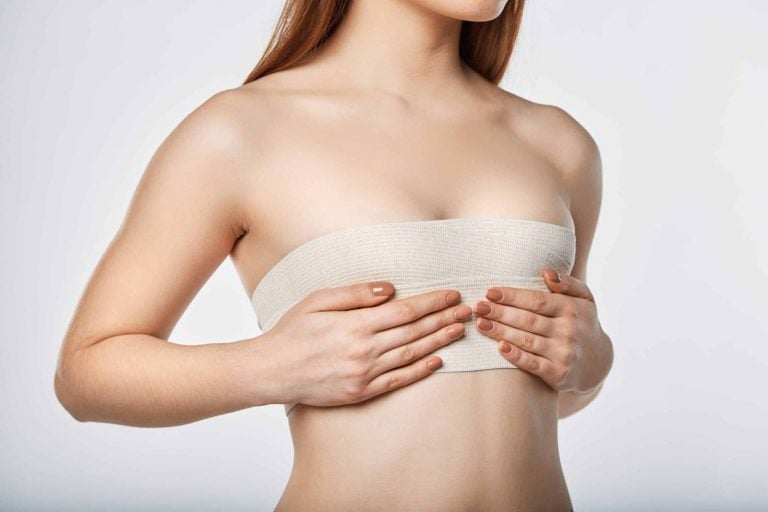
Breast implant removal can be a highly personal decision. Some patients consider explant surgery because of breast implant illness symptoms, while others notice firmness, pain, rupture concerns, or changes in breast shape years after augmentation.
As a plastic cosmetic surgeon, Dr. Chad Wu, MD, approaches explant decisions through a detailed assessment of your symptoms, implant history, anatomy, and aesthetic goals. The right plan also depends on factors such as implant condition, capsule changes, and skin quality.
This guide explains the main reasons patients consider explant surgery and how to approach the decision with clarity.
Key Takeaways
- Breast implant removal may be considered for health, implant, or aesthetic concerns.
- Breast implant illness symptoms can overlap with other conditions and require careful evaluation.
- Capsular contracture may cause firmness, discomfort, or changes in breast appearance.
- Implant rupture can present differently depending on the implant type.
- The best capsulectomy approach depends on your individual situation.
Table of Contents
- What Symptoms Lead Patients to Consider Breast Implant Removal?
- En Bloc Capsulectomy vs. Capsulectomy: What’s the Difference?
- Frequently Asked Questions
- Making the Right Explant Decision
What Symptoms Lead Patients to Consider Breast Implant Removal?
Patients consider breast implant removal for different reasons. Some begin with health concerns they believe may be related to their implants. Others develop implant complications, notice aesthetic changes over time, or simply want to return to a more natural breast appearance after breast augmentation.
Some implant complications, including rupture and capsular contracture, may lead to additional surgeries. These concerns deserve careful evaluation, but symptoms alone do not always point to one clear cause. A consultation can help determine whether the issue is related to the implant, the capsule, natural breast changes, or another medical concern.
Breast Implant Illness (BII)
Breast implant illness, or BII, is a term often used to describe systemic symptoms associated with breast implants. Currently, BII is not an official medical diagnosis and is generally evaluated by ruling out other possible health conditions.
Common breast implant illness symptoms may include:
- Ongoing fatigue
- Brain fog or difficulty concentrating
- Joint or muscle pain
- Headaches
- Skin rashes or irritation
- Hair thinning or hair loss
- Dry eyes or dry mouth
- Anxiety, mood changes, or sleep disruption
- Swelling or generalized inflammation
- Symptoms that seem to come and go without a clear pattern
A 2025 review describes the common symptoms people associate with breast implant illness (BII). These may include chronic fatigue, joint pain, weakness, and cognitive dysfunction. Some patients choose breast implant removal after other causes have been considered and their symptoms continue to affect their daily life.
Capsular Contracture
After breast implant surgery, the body naturally forms scar tissue around the implant. Capsular contracture happens when this “capsule” tightens, which can make the breast feel firm, painful, or distorted.
Wondering how to tell if you have capsular contracture and how it is staged?
Patients often first notice that a breast feels firmer than before, looks less natural, sits higher on the chest, or becomes uncomfortable. Plastic surgeons classify the condition using the Baker grading system, which ranges from Grade I, in which the breast feels soft and appears natural, to Grade IV, in which the breast is hard, painful, and visibly distorted.
Capsular contracture symptoms may include:
- Increasing breast firmness or hardness
- Tightness or pressure around the implant
- Breast pain or tenderness
- One breast sits higher than the other
- A rounded, distorted, or unnatural breast shape
- Reduced implant movement
- Asymmetry that worsens over time
If you notice these changes, Dr. Wu can assess the capsule and discuss whether implant removal, capsulectomy, implant exchange, or another revision option may be appropriate.
Breast Implant Rupture
Breast implant rupture means the outer shell of the implant has torn. The signs can look different depending on whether the implant is saline or silicone.
- Saline implant rupture: Rupture often causes noticeable deflation because the saltwater solution leaks and the implant partially or completely collapses.
- Silicone implant rupture: This can be harder to detect because the gel may stay within the capsule around the implant. It may cause no obvious symptoms, although some patients notice pain, firmness, swelling, lumps, or changes in breast shape.
Other breast implant rupture symptoms include:
- A change in breast shape or size
- New breast firmness or thickening
- Breast pain or tenderness
- Swelling
- Lumps or irregular areas
- Numbness, tingling, or altered sensation
- Increasing asymmetry
- Changes that appear after trauma or as implants age
Because silicone rupture can happen silently, imaging such as ultrasound or MRI may be recommended when rupture is suspected.
En Bloc Capsulectomy vs. Capsulectomy: What’s the Difference?
Capsulectomy refers to the surgical removal of the scar tissue capsule that forms around a breast implant. But what’s the difference between en bloc capsulectomy and total capsulectomy?
In a total capsulectomy, the surgeon removes the implant and the capsule, but the capsule may be removed separately or in sections depending on the anatomy and surgical situation.
En bloc capsulectomy is more specific. It means the implant and capsule are removed together as a single intact unit, without opening the capsule. Patients often ask about en bloc capsulectomy vs. capsulectomy to determine which option is safer or more complete.
The right answer depends on the reason for explant surgery. En bloc removal may be recommended in certain situations, such as suspected implant-related cancer or specific rupture concerns. However, it is not always necessary or technically possible, especially if the capsule is thin, delicate, or closely attached to the chest wall.
Dr. Wu can assess your implant position, capsule condition, symptoms, imaging, and goals to determine whether total capsulectomy, en bloc capsulectomy, or another approach is most appropriate.
Frequently Asked Questions
Does one need a lift after explant?
Not always. After implant removal, a breast lift may be recommended when there is loose skin, nipple descent, or sagging that will not improve enough on its own. Dr. Wu can assess your breast tissue, skin quality, and goals to determine whether an explant alone or an explant with a breast lift is more appropriate.
Will the breasts sag after removing large implants?
Large implants can stretch the skin and breast tissue over time, so some patients do notice sagging breasts after removal. The degree of sagging depends on implant size, skin elasticity, natural breast volume, age, pregnancy history, and nipple position. A breast lift can help reshape the breast when needed.
Can breast implant illness symptoms come and go?
Yes, some patients report that breast implant illness symptoms come and go. Fatigue, brain fog, joint pain, rashes, or mood changes may fluctuate over time. Because these symptoms can overlap with many medical conditions, evaluation should include a careful health history and, when appropriate, a medical workup.
Can capsular contracture return after capsulectomy?
Yes, capsular contracture can return after capsulectomy, especially if new implants are placed. Recurrence risk can depend on implant position, surgical history, inflammation, infection risk, radiation history, and individual healing response. Dr. Wu can explain how revision choices may affect the likelihood of recurrence.
Making the Right Explant Decision
Breast implant removal is not a one-size-fits-all decision. Your symptoms, implant condition, capsule, breast tissue, and aesthetic goals all matter.
If you are considering explant surgery, the next step is a detailed assessment. Book a consultation with Dr. Chad Wu, MD, to discuss your concerns and understand which surgical approach may be right for you.