Home > Services > Face lift

PLASTIC SURGERY IS THE FUSION OF ART AND SCIENCE

As we age, the visible changes are manifested on a number of levels: skin may become more lax and inelastic, jowls become deeper and more pronounced, the neck slackens, and the youthful volume from the upper cheek region and mid-face deflates and drops. Restoring youthful beauty with a facelift in Toronto, Canada, takes all of these elements into consideration. The best approach is always one that re-establishes facial harmony and a refreshed appearance.

Sculpting the face through plastic surgery requires an approach that is individualized, studied, and measured. Achieving the most appropriate result for each face requires the ability to evaluate the facial anatomy and then to apply scientific principles, skill, and artistry. Dr. Chad Wu is known for his expertise and skill with the facelift procedure. He has performed this delicate surgical procedure at his Toronto practice for many people wanting a rejuvenated, younger appearance.

WHAT CAN A FACELIFT DO FOR ME?

Depending on the unique details of your treatment plan, a Facelift can provide a wide range of benefits. Strictly sticking with traditional techniques, Facelift surgery can often:

  • Eliminate excess sagging skin
  • Tighten loose muscles and underlying tissues of the face
  • Smooth deep creases
  • Enhance contour of the midface, lower face, and jawline

When performed by Dr. Wu , facelift surgery, also known as rhytidectomy, is a surgical procedure that improves the appearance of the aging face by re-supporting underlying facial tissues and removing excess skin to achieve a more youthful, smoother facial appearance. It can improve a sagging jaw line, blunted neck line and overall appearance and youthfulness of the face.

EXCESS SKIN OR FAT IN THE NECK

A facelift can reduce a turkey neck and double chin by removing excess fat, tightening loose skin, and correcting muscle bands.

  • Makes the neckline more smooth, slender, and defined
  • May significantly improve signs of aging
  • Restores self-confidence
  • Improves self-image

LOSS OF TONE OF SKIN AND MUSCLE IN THE LOWER FACE

A facelift can correct jowls by repositioning muscle and skin in the lower face and jawline.

  • Improves definition and firmness of the jawline and lower face
  • Redefines the cheeks and cheekbones
  • Creates a more youthful appearance of an oval or heart shaped face
  • Restores self-confidence
  • Improves self-image

SAGGING AND WRINKLES IN THE MIDFACE

A facelift can correct sagging cheeks that have created deep creases below the lower eyelids or between the nose and mouth.

  • Eliminates folds and sagging skin
  • Creates a more youthful and rejuvenated appearance by returning fullness and tone to the midface and cheeks
  • Restores self-confidence
  • Improves self-image

Here’s What We Can Do For You

There are a variety of factors that might make an individual a candidate for a particular facelift technique. The most suitable facelift choice is one that takes into account your natural features and your personal preferences and goals.

Dr. Wu will always present what he feels to be the safest, most effective combination of facial aesthetic procedures, favoring the least invasive methods, to achieve your goals. When a facelift is appropriate, the below-mentioned techniques will be considered.

Many patients opt to combine facial rejuvenation surgery with other surgical and non-surgical techniques to further rejuvenate their features. If you’re interested in other restorative options, Dr. Wu will discuss a full range of treatments that can help you achieve your desired outcome.

Short Scar Facelift

This minimal incision facelift approach allows for the repositioning of deeper facial tissues with more limited incisions

Classical Facelift

Deep tissue repositioning is carried out, and more skin can be removed.

Facelift with Necklift

An incision is often added beneath the chin, and the platysma muscles are repaired.

SMAS Plication

The SMAS (a firm connective tissue layer) is tightened to lift the jowl and cheek.

SMASectomy

A strip of SMAS (a firm connective tissue layer) is removed, and then tightened.

The Procedure

Before going in for a face and neck lift, you should know how to prep for the procedure, what happens during the surgery, what the facelift recovery time is, the restrictions, and possible complications.

BEFORE THE OPERATION: GET READY

TWO WEEKS BEFORE THE PROCEDURE

  • Avoid taking aspirin or anti-inflammatory medications.
  • Mention any medications you are taking to your surgeon.
  • If you smoke, discuss it with your surgeon.
  • Remember to have your hair colour done before the operation.

THE DAY OF THE OPERATION

  • Wear comfortable clothing.
  • Do not wear make-up.
  • Do not wear jewelry.

THE SURGICAL PROCEDURE

What to Expect

The operation will be performed under general or mixed anesthesia and will last from two to four hours. After removing excess skin and subcutaneous fat and correcting sagging tissue, your surgeon may affix drains on either side of your face and a compressive bandage around your head.

RECOVERY

What Happens After the Face Lift Surgery

The procedure is a day surgery and you will leave the same day. Your face and eyelids may show bruising or swelling for 2 or 3 weeks. Your surgeon will prescribe pain medication. You may notice the scars on the temples and behind the ears becoming larger during the first few months of your recovery.

You can wash your hair a few days after your operation and apply light make-up after 10 days. You will have to wait a few weeks before dyeing your hair. 

Note: Your face will be sensitive to cold and sunlight for the first few months. A moisturizer will help.

RESTRICTIONS

What’s Not Allowed?

  • No alcohol
  • No tobacco
  • No intense physical activity
  • No make up
  • Do not lean the head forward
  • Sleep on a flat surface
  • No sun

POSSIBLE COMPLICATIONS

EARLY COMPLICATIONS

  • Infection.
  • Hematoma (accumulation of blood under the skin).
  • Dehiscence and cutaneous necrosis.
  • Paresis or paralysis of the face.
  • Paresthesia or local skin numbness.

POSSIBLE LONG-TERM COMPLICATIONS

  • Wide or hypertrophic scars.
  • Deformation of the ear lobe.
  • Irregularity of the cervical contour.
  • Alopecia or hair loss (on or around scars).
  • Hyperpigmentation of the skin.
  • Facial asymmetry, irregular contour.
  • Small visible blood vessel.

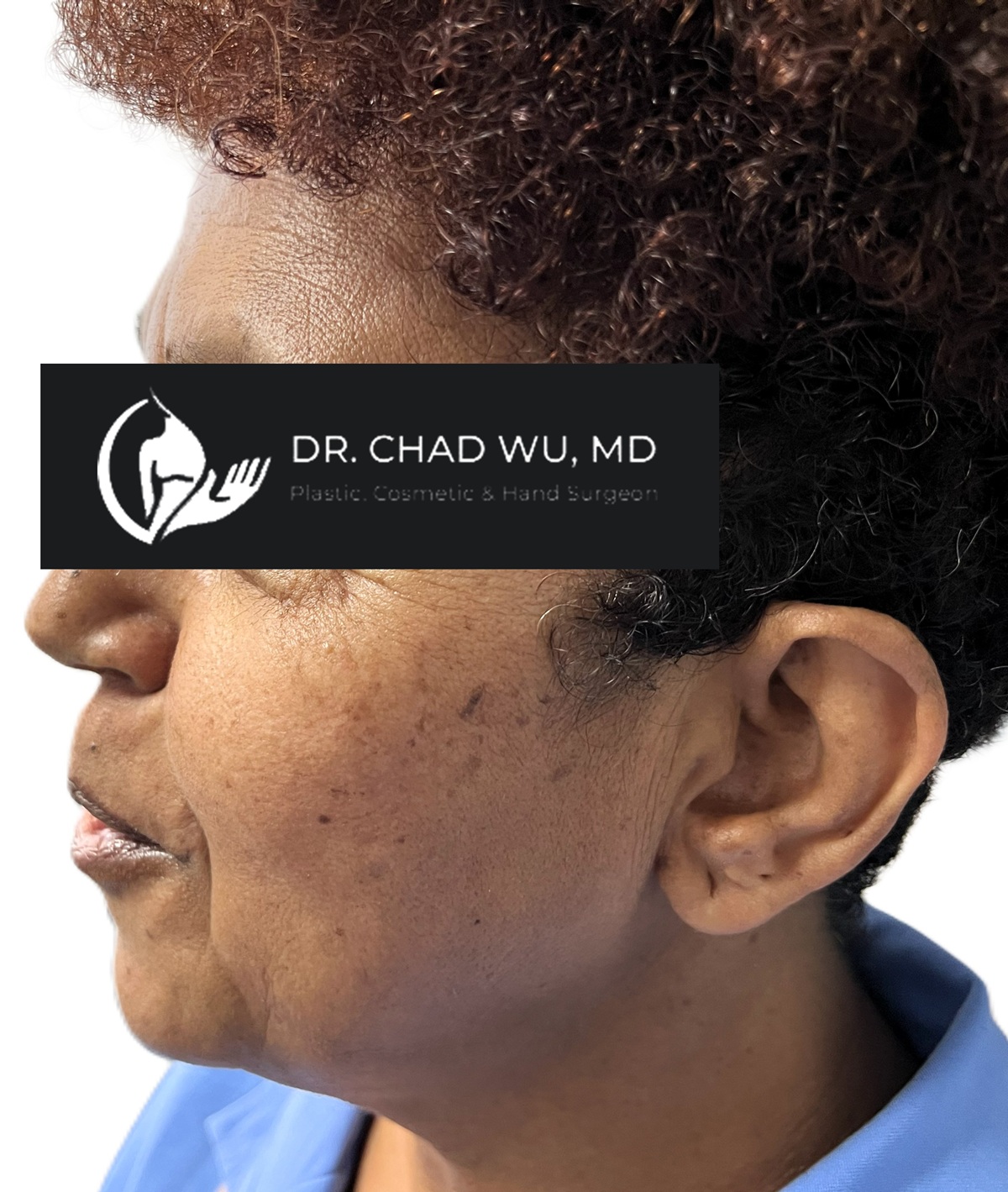
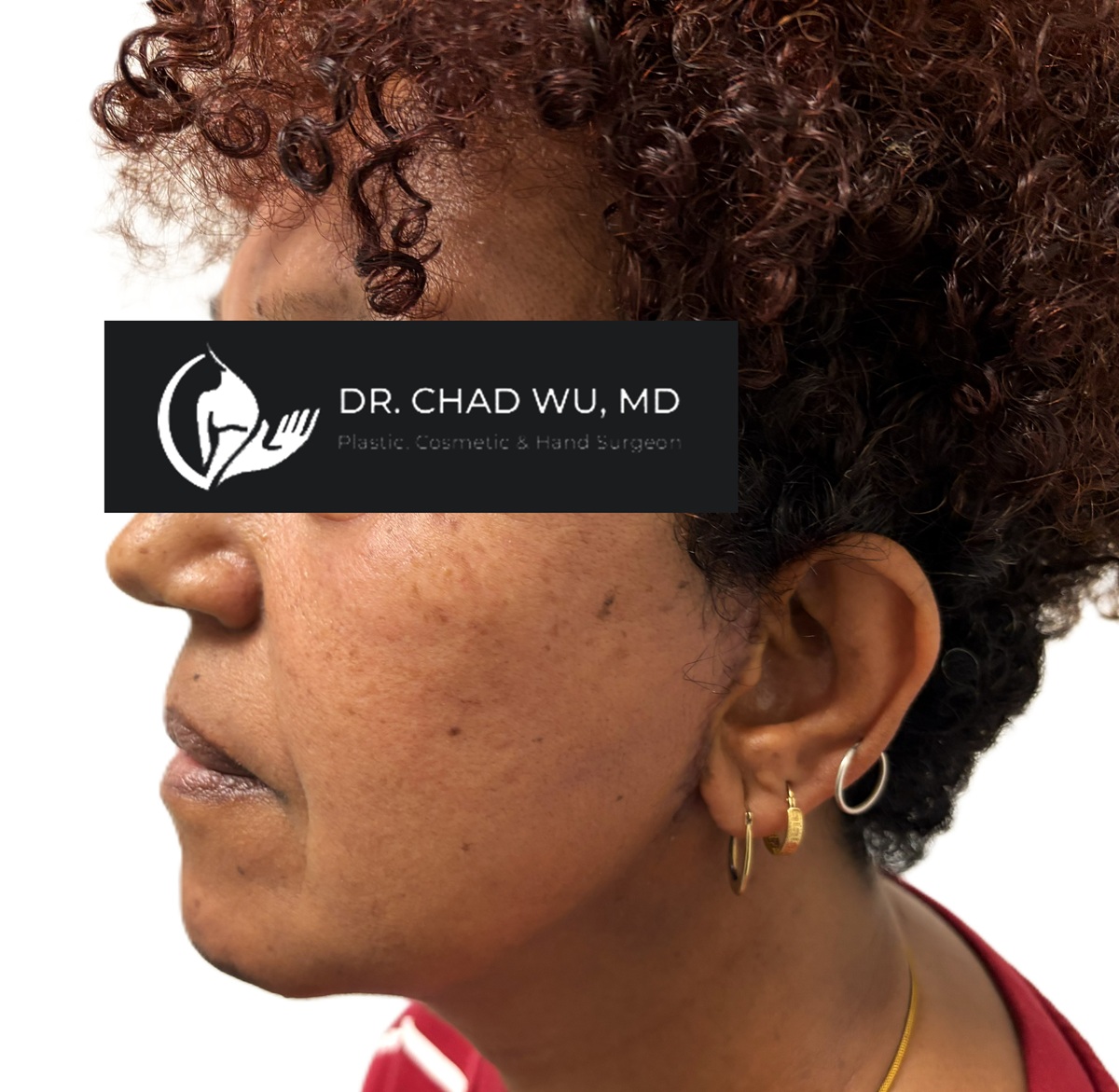
Before & After

Frequently Asked Questions

WHAT AREAS DOES A FACELIFT TYPICALLY IMPROVE?

A facelift can tighten loose facial skin in the jowls, jawline, nasolabial folds, and neck. It can reduce a turkey neck and double chin, jowls and jawline sagging and correct sagging and wrinkles in the midface. 

For a natural-looking facelift, book a consultation with Dr. Chad Wu today.

WHAT IS RECOVERY LIKE AFTER FACELIFT SURGERY?

Expect bruising or swelling on your face and eyelids for 2-3 weeks. You can wash your hair a few days after the surgery and start wearing light makeup after about 10 days, but wait a few weeks before coloring your hair. Since your face will be sensitive to cold and sunlight for the first few months, make sure to moisturize well.

After a facelift, you should avoid aerobic activities (gym, pilates, spin, etc.) for about three weeks. People usually take 10 days to 2-3 weeks off from work, since the recovery period is different for everyone.

WHERE ARE FACELIFT INCISIONS AND SCARS PLACED?

The placement of incisions varies, depending on the extent of the procedure you will be undergoing. Incisions are typically hidden in the hair behind the ear and along the hairline or in the hair above the ear to maintain as much sideburn as possible. Facelift incisions go around the ear and dip inside the ear in the front to help hide the suture lines. Some patients require a short incision beneath the chin to allow access to the neck area to tighten up the muscles in front. 

Because Dr. Wu places incisions in natural skin creases, facelift incisions heal very well, and most patients and family members will barely notice them after a few weeks. Book a consultation to understand better.

HOW LONG DO FACELIFT RESULTS TYPICALLY LAST?

On average, facelift results last 10-15 years, although you can make them last longer with good skincare routines and regular follow-ups with your surgeon for maintenance. Your skin quality and lifestyle choices have a huge impact on the longevity of the procedure.

Bear in mind that while a facelift can make you look younger, it can’t stop the clock. The natural aging process will continue, and so over time you will see gradual changes in your face. 

CAN A FACELIFT BE COMBINED WITH OTHER FACIAL PROCEDURES?

Yes. Procedures like eyelid surgery, for example, can be combined with a facelift for fabulous results. You can consult Dr. Chad Wu for more information.

WHEN CAN I RETURN TO THE GYM AFTER MY FACELIFT?

Avoid aerobic exercise for at least three weeks after your facelift procedure. Activities that raise your blood pressure or heart rate can delay your healing process. Consult your surgeon before beginning strenuous workouts.

How long will bruising and swelling last?

Postoperative bruising and swelling begin to resolve at the end of the first week. Full resolution of bruising or swelling may take 2-3 weeks. Bruising is variable, and many patients can camouflage bruises easily at seven to ten days with a concealer.

When can I go back to work?

It depends on the type of work you perform. Restrictions from work are ten days to two weeks for a contemporary facelift surgery and may be less for a mini-lift or limited procedure. Since the extent of bruising and swelling and their resolution is individual and not predictable, some patients take three weeks off to be safe.

What are the risks or complications associated with facelift surgery?

No surgical procedure is without risk. Most complications associated with facelift surgery are minor. Here are some possible problems:

      • Collection of blood under the skin (hematoma)
      • Temporary numbness around the ear
      • Depression
      • Asymmetry
WHAT IS THE AGE LIMIT FOR A FACE LIFT?

Health, not age, determines how long you can wait to have a Face Lift. A healthy individual can have a Face Lift well into their eighties.

Ready for a Face Lift?

If you’re noticing sagging skin, deepening folds, or a loss of definition along your jawline and neck, a facelift/neck lift can help you look as vibrant and youthful as you feel.

As a quadruple board-certified plastic surgeon in Toronto, Dr. Chad Wu combines advanced surgical expertise with a patient-first philosophy to help you towards a naturally refreshed, younger-looking appearance. During your consultation, you’ll receive a thorough evaluation of your facial anatomy, skin quality, and aesthetic goals to determine the right facelift approach for you.

You’ll also have the opportunity to:

  • Discuss your concerns about sagging cheeks, deep nasolabial folds, jowling, or loose skin along the neck and jawline
  • Learn about the procedures that best suits your goals
  • Review before-and-after results and understand realistic, natural-looking outcomes
  • Ask questions about recovery timelines, scarring, safety, and long-term results

Dr. Chad Wu takes a refined, individualized approach to facial rejuvenation, restoring youthful contours and firmness while preserving your natural expressions and features.

Book Your Personalized Face Lift Consultation Today

Start Your Facelift Journey’